Tracking our daughter's seizures with Rocco
A watch button, a teacher's app and a voice command replaced our estimates of absence seizures with a record her doctors can use, alongside her medication doses.
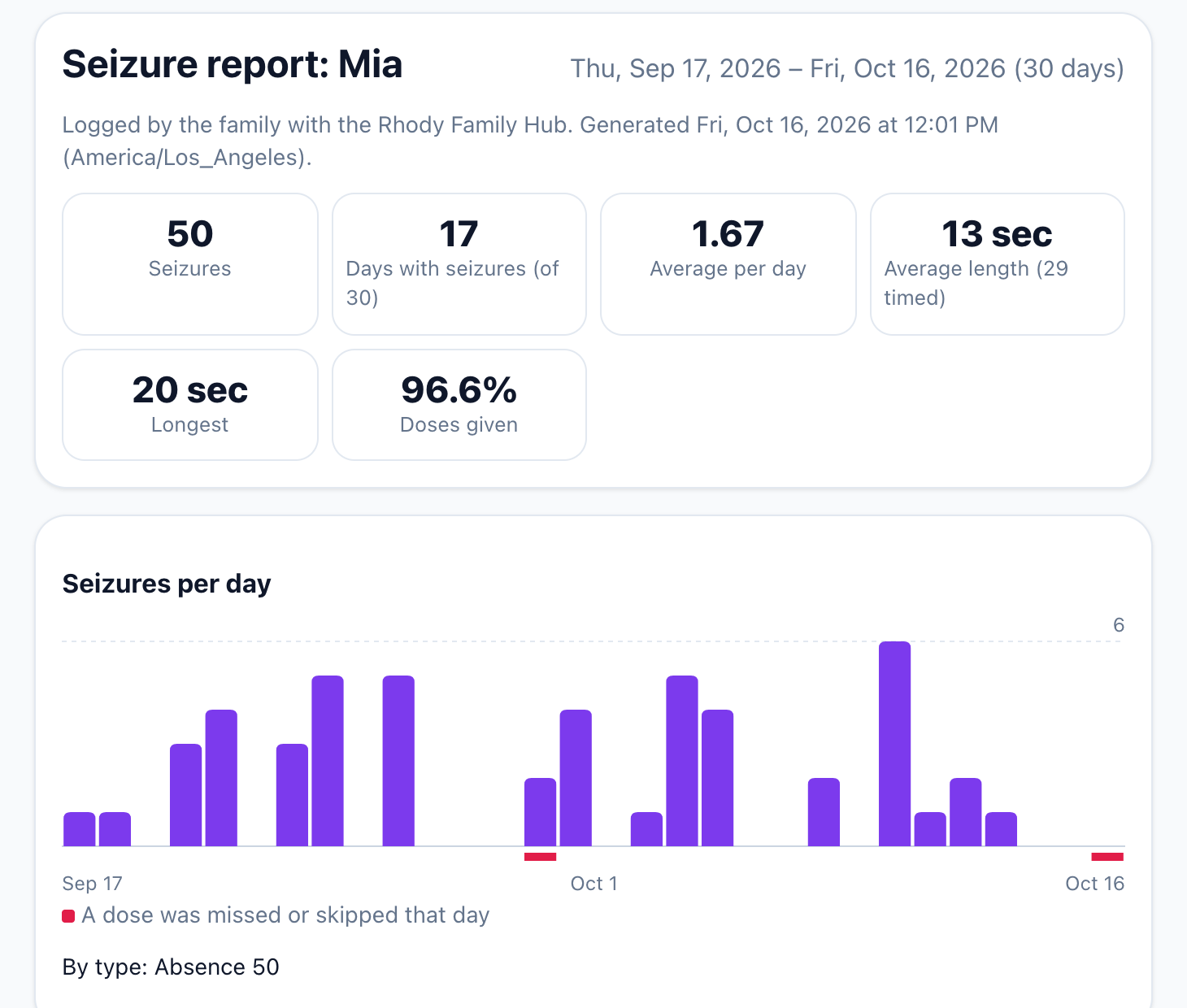
Our daughter has absence epilepsy. Absence seizures are short, often a few seconds of staring, and easy to miss. Her doctors ask how many she has, when and for how long, and for a long time our answer was an estimate. She also takes medication twice a day, and a missed dose matters.
Both are now tracked in Rocco, the family hub and voice assistant described in Rocco: our family assistant.
Medication reminders
Each dose has a one-hour window. When everyone assumes someone else gave it, nobody does, so the hub treats each dose as a task that must be closed:
| When | What happens |
|---|---|
| The window opens | The kitchen screen shows a banner and chimes, and every caregiver’s phone receives a notification |
| 15 minutes later | A second reminder if no dose is logged |
| 30 minutes later | The reminder escalates to the parents |
| The window closes | The parents are told the dose was missed |
Anyone can log a dose with one tap on the kitchen screen or a phone, and the screen records who gave it. A second tap in the same window triggers a warning instead of a double dose. The dose log cannot be edited after the fact, so it is a record we can trust.
Seizure logging
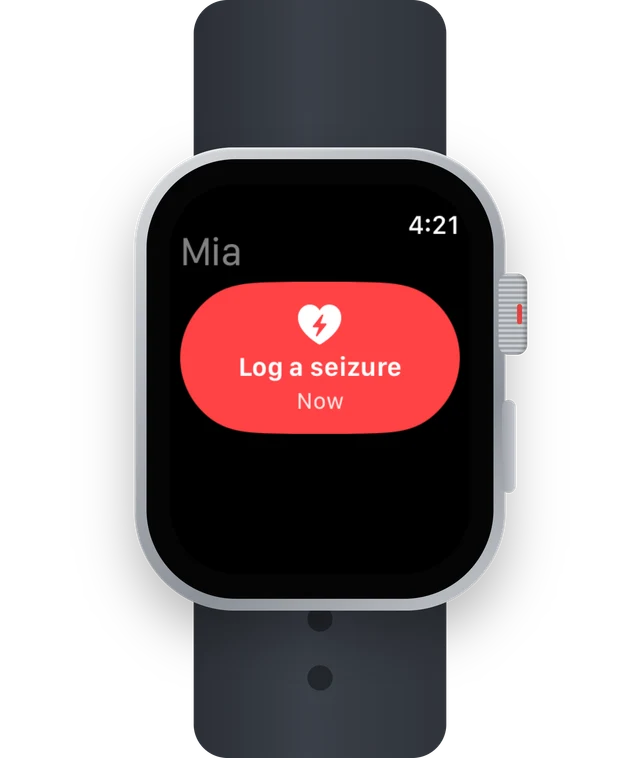
A log is only useful if logging is easier than forgetting, so anyone who sees a seizure can record it from wherever they are:
- Apple Watch. One button on her watch logs a seizure, even without a connection, and syncs later.
- Teacher’s phone. Her teacher has a logging-only version of the app, which can add entries and see only what it logged that day, and we receive a notification for each one.
- Voice. “Rocco, log a seizure” works in the kitchen, on a phone or through Siri.
- Screen. One tap logs a seizure on the kitchen screen or in the app.
The Apple Watch app proved the most practical: swipe up and press the button. Before, we had no visibility into seizures during the school day. Now we have her own record alongside her teacher’s.
The watch app is fully native because it has one job and must do it reliably. It pairs with the hub once using a six-digit code, and it can only log.
Voice behavior
Rocco logs immediately and asks no follow-up questions in the moment. Times, durations and counts are parsed by deterministic code rather than the language model, so model arithmetic never enters a medical record. He confirms with a fixed sentence, such as “Logged a seizure at 4:42 PM. That’s 3 today.” For a long or convulsive seizure he adds one line: “If a seizure lasts 5 minutes or more, call 911.” He gives no medical advice.
The dogs that give the rest of the app its personality never appear on these screens, and a test fails if one does.
Doctor report
The report changed our doctor visits. It shows seizures per day, average and longest duration, time of day, the possible triggers we recorded, and her medication doses on the same days: on time, late or missed. Recorded triggers include missed sleep, illness, missed doses and stress. Neurologists review seizures and doses together, so the report places them side by side. We print it at home or email a PDF before an appointment.
Privacy
- Medication names. Lock-screen notifications never name the medication, and its name is not sent to Claude or Gemini.
- Model exposure. A seizure logged by voice reaches the language model as text, like any request to Rocco. The watch, the teacher’s app and the buttons involve no model at all.
- Limited keys. The teacher’s app and the watch hold keys that can only log and cannot read her history.
- Report access. The report goes only to us, and we decide who sees it.